
Anygum Marketplace.
Host APIs.
Compose apps.
Anygum is a working marketplace-style platform where anyone can host their own API and builders can compose bespoke apps that pull services from multiple vendors. Identity runs through Cloudsight — custom auth on Auth0 — so provider and consumer context share single sign-on, RBAC and org controls, multi-instance of the same app for different teams, easy telemetry, and a single payment funnel for consumption. Ideation started as an internal auth problem for SaaS distribution; it was spun out as Anygum. Elobooks.net uses it. Distribution limited wider market reach; the product itself works.
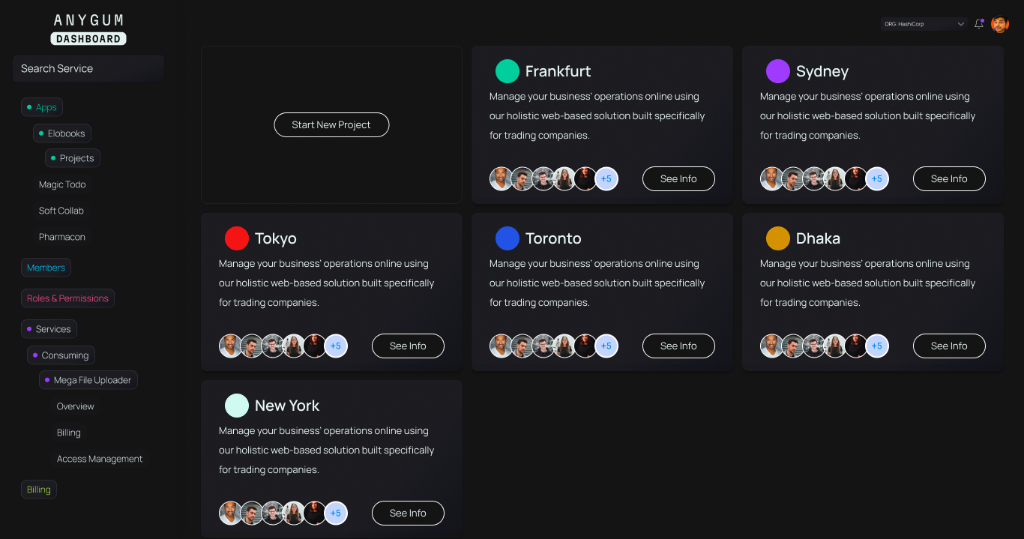
A platform for hosting APIs and composing apps — with Cloudsight auth underneath.
Before MCP made agent tool-access a category, ELO needed a way for anyone to host an API, for builders to bind the right services into a bespoke app, and for consumers to get single auth, telemetry, payment, and org/RBAC controls — including multiple instances of the same app for different teams.
Ideation started as an internal auth problem for SaaS distribution. That spine was spun out as Anygum: providers bind in the backend; builders find exact APIs and ship solutions for consumers.
Cloudsight is the identity spine (custom auth on Auth0). Anygum is the marketplace and composition layer. Elobooks.net is a live consumer. Distribution limited wider market reach; the product itself works.
Visual Blueprinting & User Flow Storyboard
Because Anygum coordinates providers, consumers, Cloudsight auth clients, and multi-instance org controls, designing it entirely in Figma was critical. Fauzul designed every view as sole designer, serving as a blueprint that allowed the Dhaka and Norway engineering teams to align before committing to code.
Builders discover services to bind
Builders search the marketplace for the exact APIs to bind into a bespoke app. Providers have already registered services in the backend; the catalog surfaces what can be composed for a consumer without each vendor shipping a separate integration stack.
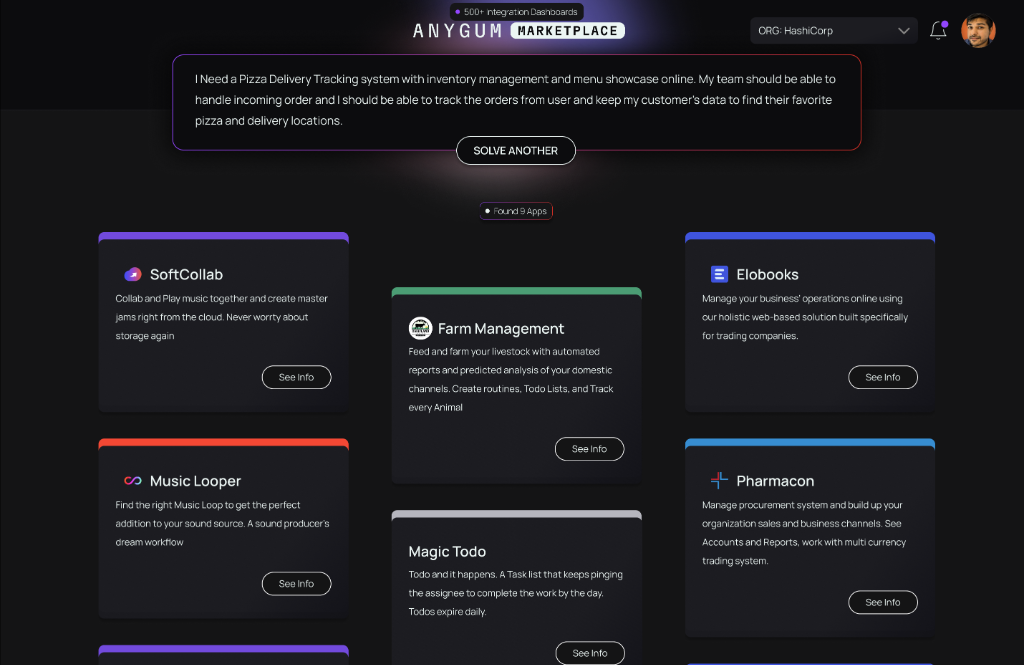
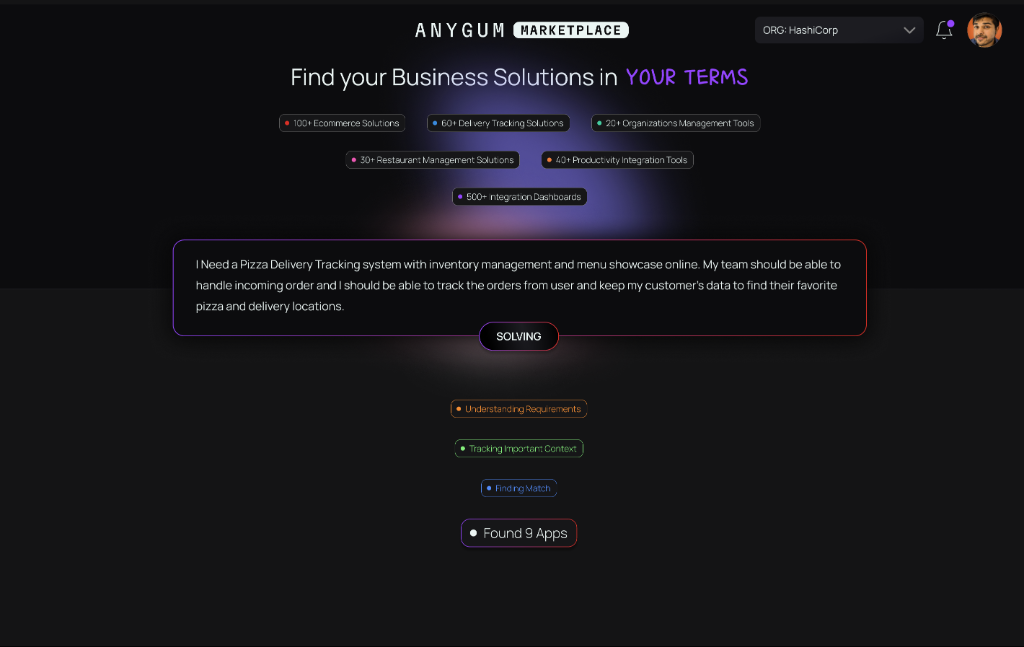
Multi-vendor services into one app
Matching and binding pull services from multiple vendors into a single consumer-facing app. The platform keeps provider and consumer context in one place so auth, telemetry, and payment for consumption stay centralized rather than reinvented per integration.
Org RBAC and multi-instance control
Every bound service instance sits under one dashboard. Admins map org roles and instance permissions — including multiple instances of the same app for different teams. Elobooks.net is a live consumer: its instance view shows status and access managed through Anygum/Cloudsight rather than a parallel identity stack.
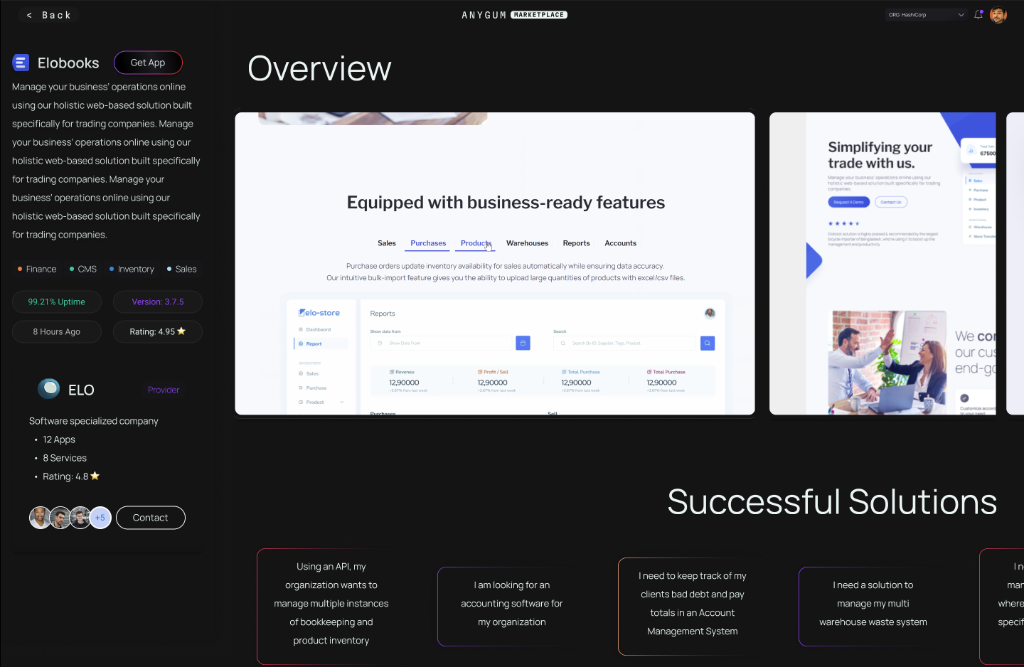
Cloudsight on Auth0 — and Dhaka–Norway delivery.
Anygum was co-developed by ELO's Dhaka and Norway teams, led end-to-end by Fauzul. Cloudsight supplies custom auth on Auth0 — single credentials and context for providers and consumers, org RBAC, and instance permissions. Anygum sits on top for marketplace listing, composition, telemetry, and the shared payment funnel for consumption.
Elobooks.net authenticates and authorizes through this stack today. Wider international distribution was the bottleneck — not whether the platform ran.
What ships in production.
If we worked together.
I bring platform connectivity scar tissue — multi-vendor APIs under single auth, RBAC, telemetry, and payment — plus cross-border engineering leadership and Figma design rigor.
See it in the wild.
This case study covers how Anygum was built — these links open what ships today: the live product, repo, demos, and supporting material.
Frontgo
Coordinated ELO's dedicated engineering pod for Frontgo (Frontpayment's engineering arm) in Norway. The project itself was owned and driven by the client's dedicated project manager; Fauzul's role was to keep the three-engineer pod aligned — setting engineering practices, advising on the Vipps and financing integrations, unblocking communication and requirement gaps, leading hiring/HR, and running the weekly and monthly syncs — through to a clean handover to the in-house team.